How robot mowers find their way around
Boundary wire, RTK, LiDAR or cameras — the navigation system decides more about whether a mower suits your yard than any other specification.
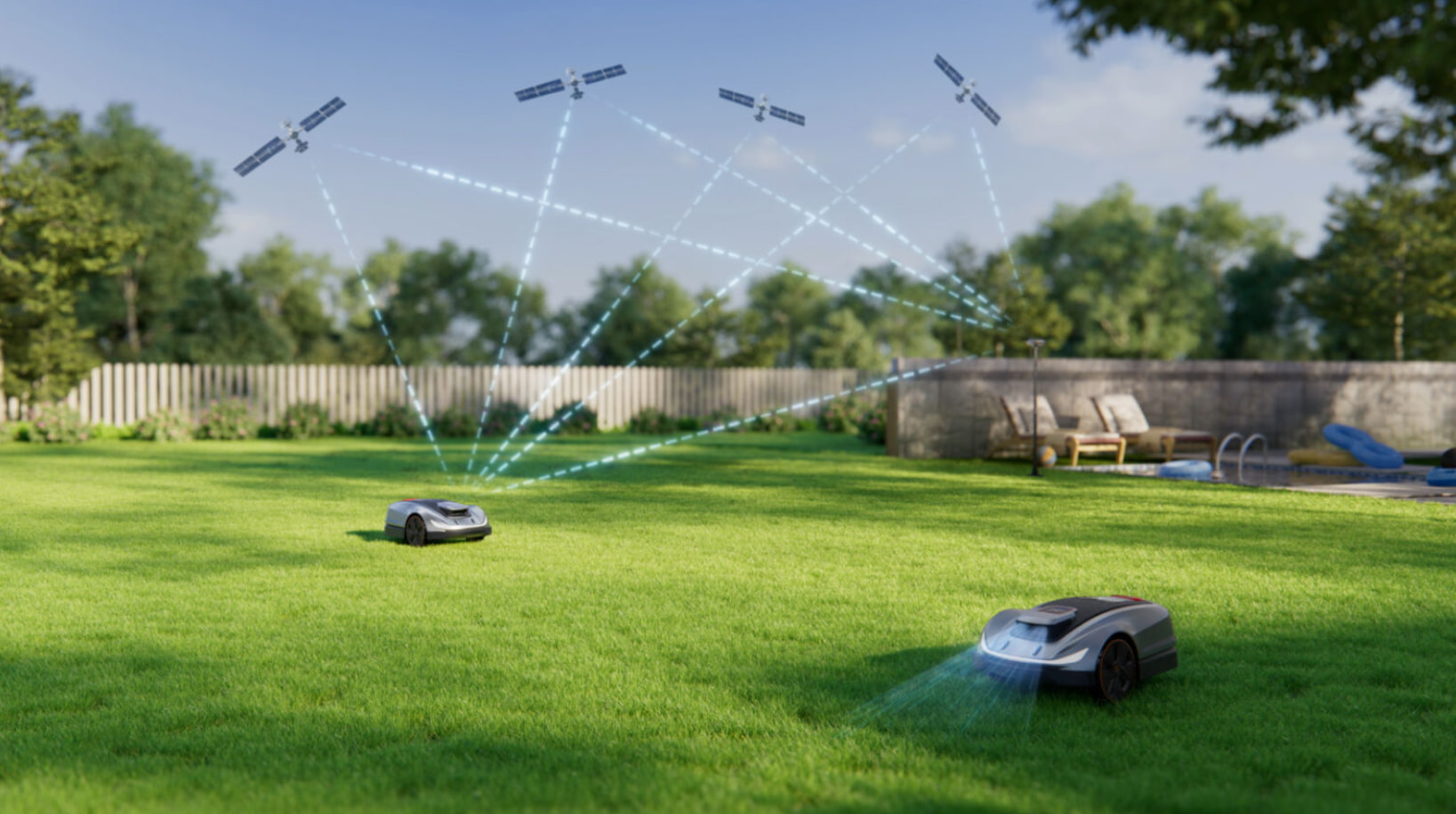
Almost every complaint about a robot mower traces back to one decision: the navigation system. Get it right and the machine disappears into the background for a season. Get it wrong and you spend the summer carrying it out of a flower bed.
Boundary wire
The original approach. You bury a wire around the lawn and the mower stays inside it. Old, cheap and stubbornly reliable — right up until you want to move a flower bed, at which point you are digging again. Almost nobody launches a wire model now, but the installed base is enormous and second-hand prices are attractive.
RTK satellite
A fixed antenna gives centimetre-accurate positioning. Superb across open ground. The catch is that RTK needs a clear view of the sky: under a mature canopy the signal degrades, the mower drifts, and eventually it gives up and parks. If your lawn has heavy tree cover, an RTK-only machine will frustrate you no matter how good the rest of it is.
LiDAR
Laser mapping. No satellites, no wire, no dependence on the sky. This is the answer for shaded yards, and it has quietly become the default at the premium end of the market. It costs more and it can be confused by tall grass on a first cut.
Camera vision
Cameras plus AI, nothing to bury and nothing to mount. Cheapest to install and the easiest to set up. Also the most easily confused — by low light, by long grass, by a lawn that all looks the same.
So which one
Open, flat, sunny lawn: RTK gives you the most capability per dollar. Mature trees anywhere on the property: LiDAR, and do not let anyone talk you out of it. Small tidy lawn and a tight budget: camera vision is fine. Steep slopes: worry about drive type first and navigation second.